Photography starts with a choice. John Szarkowski saw it as picking what to show and what to hide. This choice turns the factual into creative, not limiting.
Szarkowski’s five points — The Thing Itself, The Detail, The Frame, Time, and Vantage Point — offer a clear way to shape vision. They help photographers see more and develop taste in fine art and professional photography.
Today, instructors like Sean Gallagher say mindset and practice are key, not just gear. They teach lighting, composition, timing, color, and series-building. Feedback and editing help hobbyists become confident photographers.
This article will mix Szarkowski’s ideas with today’s practical methods. You’ll learn to improve your sight, build a portfolio, and show your work online. This supports a lasting photography career.
Key Takeaways
- Seeing is a skill: selection defines photographic vision.
- Szarkowski’s five issues form a useful language for fine art photography.
- Practical training and feedback accelerate growth in professional photography.
- Combining theory and assignments builds confidence and style.
- Presenting work on a photography website helps reach audiences and clients.
Understanding the Fundamentals of Photography
The camera changed how we capture moments. Photographers learn to use mechanical limits creatively. They master exposure, composition, and style to go from simple snaps to meaningful work.
The Exposure Triangle: ISO, Shutter Speed, and Aperture
ISO, shutter speed, and aperture are key. ISO controls how sensitive the sensor is. Shutter speed can freeze or blur time. Aperture affects depth and light. Knowing how these work lets photographers control their shots.
The Importance of Composition
Composition is about what stays in the frame. John Szarkowski said photographers must pick their view, focus, and frame. These choices guide the viewer’s eye and tell a story.
Exploring Different Photography Styles
Each style needs its own approach. Portraits need shallow depth and light control. Photojournalism is about quick shots and clear frames. Fine art plays with angles and details. Trying different styles helps find what works best.
- Use exposure control to match creative intent for studio or location shoots.
- Test Szarkowski’s frame, detail, and vantage concepts when composing.
- Practice across portrait, landscape, and documentary paths to learn what a client seeking photography services might value.
Developing a Creative Vision
Photographers need to train their eyes, not just buy new gear. Small, daily practices help uncover the hidden beauty in everyday scenes. This section covers practical techniques, sources of inspiration, and journaling habits to find your unique voice in photography.
Techniques for Finding Unique Perspectives
Photographers learn to see by changing their view. Try shooting from high and low angles, close-ups, and wide shots. This reveals new connections in a scene.
Doing a photo walk with a single lens or focal length forces you to think creatively. Daily assignments also sharpen your visual skills. Set a weekly theme, like textures or reflections, and shoot at different times.
This trains you to notice light, composition, and hidden moments. It helps elevate your work to fine art photography.
Inspiration from Nature and Urban Landscapes
Nature offers changing light, organic shapes, and unpredictable patterns. An early morning walk in a park teaches you about subtlety in tone and scale. City streets provide geometry, human interaction, and layered stories.
Study the work of National Geographic photographers and The Guardian contributors. This helps you understand different approaches. Switching between landscapes and cityscapes broadens your ideas for your photography portfolio.
Journaling to Cultivate Ideas
Keeping a daily photo blog or notebook tracks your progress. Write short captions about your intent, emotion, and technique for each photo. Over time, you’ll notice patterns that guide your editing and curation.
Use a simple log: date, location, constraint, and one learning point. This habit turns scattered experiments into a focused path for fine art photography and adds practical elements to your portfolio.
Mastering the Art of Composition
Composition is key to how we see an image. Photographers learn to pick and remove elements in the frame. By studying greats like Henri Cartier-Bresson, we see how edges and cropping create new shapes.
Rule of Thirds and Its Variations
The rule of thirds helps place subjects off-center. It’s seen as a guide, not a rule. Students use it to balance images and then try different placements to change the focus.
There are also golden ratio and dynamic symmetry. These methods help create tension or calm. Showing examples side-by-side on a website helps understand when to use each.
Leading Lines and Framing Techniques
Leading lines guide the eye to the subject. Roads, railings, and shadows are great for this. They help simplify scenes and tell stories.
Framing adds context and focus. Windows, doorways, and branches act as secondary frames. Mixing framing with off-center placement adds depth to photos.
Creating Depth with Layering
Depth comes from layering elements. Techniques like selective focus make each layer stand out. Assignments focus on building immersive scenes.
Breaking rules can lead to creative results. Blur, foreshortening, or cropped edges are used by many. Knowing when to follow or break rules helps improve photography skills.
The Power of Lighting in Photography
Light shapes mood and form. At the International Center of Photography, students learn how light uncovers a subject’s true nature. This idea was first shared by curator John Szarkowski. Professionals see light as a way to show texture, time, and truth in their photos.
Natural vs. Artificial Light: Pros and Cons
Natural light has soft gradients and wide color changes, perfect for landscapes and candid shots. It changes quickly, so timing is key. Learning to read clouds, angles, and temperature is vital for digital photography.
Artificial light gives more control. Studio strobes and LED panels allow photographers to shape light with precision. Setting up a studio requires practice with various tools to achieve the desired effect.
Golden Hour: Capturing Stunning Light
Golden hour offers warm, focused light that flatters skin and adds depth. Photographers should arrive early to find the best angles and watch how light changes.
Practical tips include using a reflector to fill shadows and adjusting exposure to keep highlights. A tripod is essential for low shutter speeds. Assignments focused on golden hour teach the importance of timing and patience in digital photography.
Using Shadows to Add Drama
Shadows add depth and story. High-contrast shots can highlight a subject, while soft shadows suggest mood. Photographers studying classic and street photography learn to use shadows in their compositions.
Techniques include side lighting for texture, backlighting for silhouettes, and selective fill for detail. These methods help distinguish professional from amateur photography by adding emotion and form to each image.
Understanding Color Theory
Color greatly affects how we feel about an image. Szarkowski’s work on black-and-white detail and frame helps with color use today. Photographers learn to choose colors like red or teal that enhance the subject, not distract.
This section combines psychology and practical post-processing. It shows how creative and digital photography use color together.
The Psychology of Colors in Photography
Colors quickly set a mood. Warm colors like orange and yellow feel cozy or energetic. Cool colors like blue and green are calming or distant.
When planning a story, color is a silent guide. It sets the mood before we see the details.
Complementary vs. Analogous Color Schemes
Complementary colors use opposites to grab attention. A red subject against green surroundings stands out. Analogous colors use nearby hues for a smooth feel.
Using analogous colors makes a portfolio look unified. It ties images together.
Techniques for Color Grading in Post-Processing
Techniques start with white balance to set a base. HSL sliders adjust hue, saturation, and luminance for control. Split toning adds mood without changing all colors.
Many teach using LUTs and presets for a consistent look. These tools help create a cohesive body of work. They strengthen the story in a set of images.
Editors should aim for balance. Color grading should enhance the subject and keep skin tones natural. Consistency makes a series look curated, not random.
Equipment Essentials for Photographers

Choosing the right gear is key for what a photographer can capture. From old dry plates to today’s mirrorless cameras, technology has grown a lot. It’s important to pick tools that fit your style, budget, and where you work.
Choosing the Right Camera for Your Needs
Think about what you want to shoot and choose a camera system that fits. Full-frame mirrorless cameras from Sony or Canon are great for low-light shots. They’re perfect for weddings and portraits.
Crop-sensor cameras, like Fujifilm X-series and Nikon DX, are lighter and cheaper. They’re great for travel and documentary work.
Smartphones can also take amazing photos for social media and some editorial work. For serious photography, look for a camera with good autofocus, dynamic range, and a wide range of lenses.
Must-Have Lenses for Various Genres
The lens you choose affects your view. A fast 50mm or 85mm prime lens is best for portraits. A wide-angle lens, like a 16–35mm, is great for landscapes and architecture.
A 24–70mm zoom lens is versatile for events and quick shoots.
- Portraits: 85mm f/1.8 or 50mm f/1.4 for flattering compression.
- Landscapes: 16–35mm for sweeping vistas and detail.
- Photojournalism: 24–70mm or 35mm prime for adaptability.
Whether to use primes or zooms depends on your style. Primes help you think more about framing. Zooms are faster for covering more ground. Choose lenses that match your photography services and what clients expect.
Essential Accessories to Enhance Your Craft
Accessories are key to a complete kit and smooth shoots. Must-haves include a strong tripod, extra batteries, high-quality memory cards, and a color-calibrated monitor for editing.
- Tripod: vital for long exposures and consistent framing.
- Lighting: portable flashes or continuous LED panels for controlled light in a studio or on location.
- Reflectors and modifiers: shape light for portraits and product work.
- Backups: spare drives and client-ready print materials for photography services and delivery.
Good equipment means less downtime and better work. Thoughtful choices let you focus on your vision, not technical issues.
Building a Portfolio
A strong portfolio shows a photographer’s vision. It’s about choosing images that show style, skill, and a story. Aim for a few images that tell a story, not many random ones.
Tips for Selecting Your Best Work
- Keep the number of images low to focus on your best work.
- Choose images that share themes or styles.
- Arrange images so each one flows into the next.
- Show technical skill without disrupting the mood.
How to Showcase Your Style Effectively
- Make themed series with short captions to explain your vision.
- Start with a strong image and end with one that ties everything together.
- Keep editing consistent to maintain a cohesive look.
- Present your work as projects to tell a story, not just random photos.
Utilizing Online Platforms for Exposure
- Have a dedicated photography website for a clean gallery.
- Use social platforms like Instagram to connect with clients and others.
- Include a list of photography services on your website for direct hiring.
- Join photo communities and portfolio sites for feedback and visibility.
The Importance of Post-Processing
Post-capture choices have shaped photography from the darkroom to today. Decisions like cropping and tonality were key before modern software. Now, these choices are part of digital workflows.
Overview of Popular Editing Software
Many pros start in Adobe Lightroom and finish in Adobe Photoshop or Capture One. Mobile apps like Adobe Lightroom Mobile and Snapseed let you edit on the move. Raw converters are key for keeping detail and range in digital photos.
Common Techniques to Enhance Images
- Start with raw processing: adjust exposure, white balance, and contrast to set a neutral baseline.
- Use local adjustments for selective recovery, keeping edits targeted and subtle.
- Apply sharpening and noise reduction in balance to retain texture without artifacts.
- Save virtual copies to test different looks while preserving the original edit history.
Maintaining a Natural Look in Edits
Instructors teach ethical handling of subjects. Subtle color grading and consistent tones across a series keep work believable. Images on a photography website work best when they feel true to the scene.
Before-and-after comparisons are a common assignment. They show how small changes in contrast or hue can clarify intent. This practice connects darkroom craft to modern post-processing.
Networking and Community Engagement
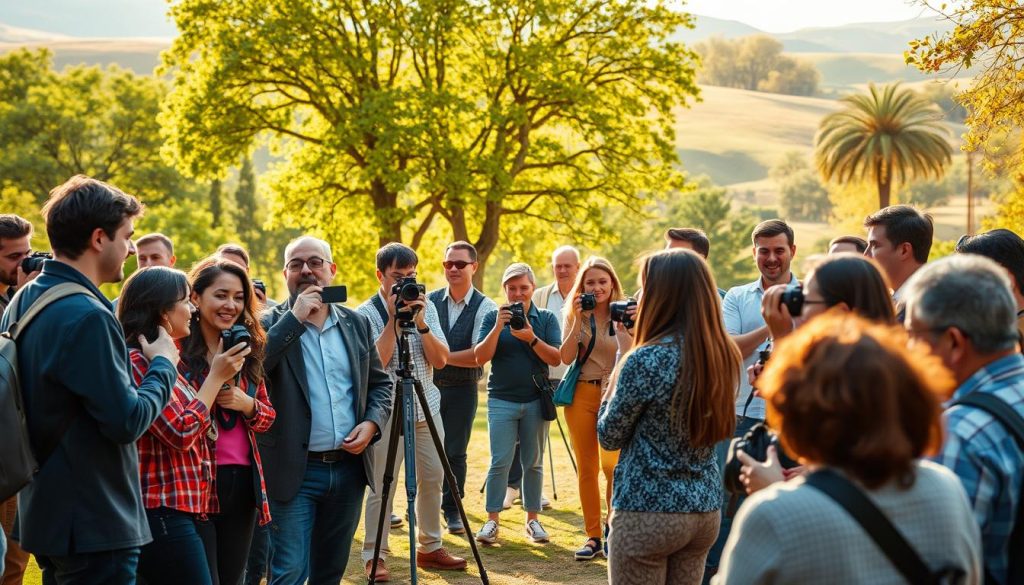
Connecting with peers shapes taste, builds opportunity, and speeds growth. Museums, curated exhibitions, and talk series offer a long view of how photographic networks form. Photographers who seek peers gain perspective on work, learn market signals, and strengthen a photography business through meaningful contacts.
Attending Workshops and Photographic Events
Attending photography workshops gives focused practice and direct critique from instructors. Many programs from institutions and private educators include assignment feedback and lifetime access to class resources. In-person events expose attendees to new techniques and to the norms that guide professional photography.
Building Relationships with Other Photographers
Regular contact with peers turns one-time meetings into lasting collaborations. Photographers trade gear tips, join joint shoots, and refer clients to one another. These ties help a working photographer expand offerings, stabilize income, and grow a photography business.
The Value of Online Photography Communities
Online communities provide critique, exposure, and project partners across time zones. Forums, course groups, and social platforms enable quick feedback and portfolio sharing. When used well, digital networks complement local connections and support goals in professional photography.
Understanding the Market
Knowing the market is key for photographers to offer the right services and find clients. Szarkowski pointed out photography’s wide range, so photographers must decide where they can add the most value. Picking a niche helps in choosing what to include in your portfolio, how to market, and whether to have a studio or work on the go.
Identifying Different Photography Niches
Photographers can specialize in weddings, commercial work, editorial, fine art, stock, or real estate. Each area requires a unique style, equipment, and client base. For example, a real estate photographer will offer different services than a fine art seller.
Choosing a niche means looking at local demand, competition, and your strengths. A focused portfolio attracts the right clients and makes you a specialist in your field.
Pricing Your Work: Strategies for Success
Setting prices is about finding a balance between value and making a living. You can use package deals for events, charge by the hour or day for commercial shoots, or set licensing fees for editorial or stock. Clear packages help clients understand what they’re getting and save time on negotiations.
When pricing, consider your costs, studio expenses, and profit goals. Offer different tiers to let clients choose what fits their budget while protecting your time and creative effort. Regularly check your prices to keep up with the market.
Navigating Copyright and Legal Issues
Understanding the law protects your work and builds trust with clients. In the U.S., photographers usually own the copyright to their images. Licensing agreements outline how clients can use your work and what they’ll pay.
Use model releases for recognizable faces, contracts for every job, and watermarks for online samples. Registering important images with the U.S. Copyright Office can help in disputes over licensing.
By focusing on a niche, setting smart prices, and understanding the law, you can build a strong photography business. Clear offerings and documented agreements help you grow your studio and provide consistent service to clients.
The Business of Being a Photographer
A successful photography business combines creativity with clear presentation and consistent client outreach. Curators like John Szarkowski showed that framing and narrating images changes their value. By treating their work as both art and service, photographers can gain more market traction.
Marketing Your Photography Services
Marketing starts with a clear offer and a repeatable process. List your core services, client steps, and turnaround times. This way, prospects know what to expect. Use email newsletters, targeted ads, and client testimonials to turn inquiries into bookings.
Creating a Personal Brand
Branding relies on consistent visuals and a clear voice. Choose a color palette, font, and editing style that fit your niche. A cohesive photography portfolio on your website proves your style and quality.
Leveraging Social Media for Growth
Social media platforms have different roles in attracting clients. Instagram is great for curated images and Stories that show your process. Facebook and LinkedIn are better for local outreach and partnerships. Regular posting, timely responses, and engaging with your community can turn followers into clients.
Practical steps include a polished website, well-labeled galleries, and clear pricing. Courses on SEO and storytelling help position your work effectively. This approach boosts your online presence and networking.
Long-term success comes from repeat clients and referrals. Keep your booking workflow lean, ask for reviews, and update your portfolio seasonally. Focus on channels that bring real results to sustain momentum.
Continual Learning and Growth
Photographers grow by studying, getting feedback, and trying new things. Looking at photography history, we see that progress is not always linear. Seeing different images and techniques helps improve taste and technical skills.
Getting honest feedback is key to getting better. Teachers in photography classes offer specific tips on composition, lighting, and workflow. Friends and professionals can also spot things we miss in our work.
Exploring Advanced Techniques
Advanced workshops help photographers learn more. They cover topics like studio lighting, retouching, and large-format photography. These classes offer assignments and lifetime access, helping to turn hobbyists into professionals.
Staying Current with Industry Trends
It’s important to keep up with new technology and market changes. Watching for new camera sensors, mobile tools, and AI editing helps decide what’s worth learning. Understanding trends in photography helps focus efforts on what’s in demand.
- Read influential books such as The Photographer’s Eye to study composition and historical context.
- Join targeted photography courses that offer critique, technical modules, and project reviews.
- Attend workshops and photo walks to practice advanced lighting and workflow techniques.
- Monitor equipment developments and market shifts to align offerings with demand.
By studying, getting feedback, and keeping up with trends, photographers can grow. They keep their unique voice while staying relevant in the ever-changing world of photography.
Conclusion: Seeing Like an Artist
Szarkowski said photographers should value the real and see the hidden picture in it. This idea is key today: it’s about vision and mindset, not just equipment. By training to spot and capture special moments, photographers turn everyday scenes into art.
Embracing Your Unique Perspective
They should see practice as a discipline. Doing structured assignments, shooting daily, and getting feedback sharpens their eye. Building a focused photography portfolio shows their unique view and prepares them for a photography business.
Final Thoughts on Artistic Growth and Photography
Challenging assumptions and seeking feedback is important for growth. Learning from photography history, practicing, and curating work leads to lasting creative photography. With effort, study, and the right community, anyone can become a skilled photographer in the US market.