Art history gives us tools for anyone in the art world. An art historian with 24 years of experience says it’s about understanding human history through art. It shows how facts and meanings change over time.
The Great Wave off Kanagawa by Hokusai (c.1831) is a great example. It started as a simple image in Edo Japan but now means more to people worldwide. This shows why knowing where art comes from is important.
Art historian Maria Brito says knowing art history helps collectors, artists, and advisors. It helps us see the difference between real art and just trends. It also helps us make better choices when buying or creating art.
María Magdalena Ziegler points out many benefits of studying art history. It lets us see the creative journey of humanity, learn from Monet’s Water Lilies, and solve problems like Joseph Paxton did. It also teaches us to see artists as people and helps us deal with uncertainty, skills useful in any art field.
Key Takeaways
- Art history links concrete facts with changing meanings to deepen creative practice.
- Lineage and museum study improve taste and decision-making for collectors and artists.
- Historical examples provide models for problem solving and creativity across media.
- Studying visual arts expands emotional range and image literacy for professional work.
- Art history helps professionals avoid hype and invest in lasting, informed choices.
Understanding the Importance of Art
Art is a living record of human life. It ranges from ancient cave paintings to Rembrandt’s detailed drawings. These works show our beliefs, hard work, happiness, and sadness over time and space. Art historians study these pieces to understand how people lived and thought.
The Role of Art in Human Culture
Art holds communities together through rituals, identity, and memory. Museums, like those curated by Maria Brito, help us learn to see better. Through various art forms, we share values and mark our place in society, beyond just wealth.
Art as a Reflection of Society
Important art pieces reflect our social structures and conflicts. The Book of Kells keeps religious stories alive for future generations. Hokusai’s prints show devotion. Paintings and sculptures reveal our fears, hopes, and power struggles, showing how our views and beliefs change over time.
Emotional Impact of Art on Audiences
Art shapes how we feel and helps us cope. People feel deeply moved by The Scream, Monet’s Water Lilies, and figures like Coatlicue. This emotional connection builds empathy, broadens our views, and helps us understand our complex feelings.
Visual arts act as a cultural bond. They keep our traditions alive, teach us about different cultures, and help us remember and dream about our future. Through various art forms, we share a common language that guides our collective memory and imagination.
The Foundations of Art History
Art history explores how images have been used to convey meaning over time. It views paintings, sculptures, architecture, and prints as windows into human thought. Scholars connect ancient cave paintings to modern museum art.
Understanding different periods reveals patterns in art. For example, some eras focus on sacred themes, while others use industrial materials. This helps curators and students compare works across time.
Key Periods in Art
-
Prehistoric — early marks and cave imagery that show image-making as shared ritual.
-
Medieval — illuminated manuscripts and Byzantine icons that emphasize text and devotion, as seen in the Book of Kells.
-
Renaissance — a rebirth of classical ideals and perspective, with figures such as Leonardo da Vinci and Michelangelo reshaping fine art.
-
Baroque — dramatic light and illusionistic ceilings, exemplified by Andrea Pozzo, that aimed to move viewers emotionally.
-
19th century — industrial advances and venues like Joseph Paxton’s Crystal Palace that altered scale and exhibition practices.
-
Modernism — experimentation in form and medium that led to modern art movements and new visual arts vocabularies.
-
Postwar to contemporary art — global networks and multimedia practices that expanded definitions of art in the late 20th and 21st centuries.
Major Movements and Their Influences
Movements serve as visual languages. Impressionism focused on light and moment, changing color use. Expressionism emphasized inner feelings, influencing later abstraction.
Abstract Expressionism and Minimalism changed scale and process. Artists like Mark Rothko and Agnes Martin rethought composition and surface. Maria Brito says knowing these lineages shows how originality comes from adaptation.
Conceptual Art shifted focus to ideas over objects. Minimal techniques influenced contemporary art, using installation, performance, and new media. Each movement left methods and choices for later artists to use or challenge.
-
Impressionism — altered brushwork and plein air practice that changed landscape painting.
-
Expressionism — pushed color and gesture to convey psychological states.
-
Abstract Expressionism — emphasized process, large scale, and painterly action.
-
Minimalism — reduced form to essentials, affecting sculpture and painting.
-
Conceptual Art — placed idea above material, influencing contemporary curatorial practices.
Studying these movements helps us see how artists solved problems and adapted tools. It teaches us to recognize influence, assess technique, and understand fine art within cultural change.
Influential Artists Who Shaped History
Looking at influential artists shows how they change visual culture. Their lives, methods, and times help us understand their work. This section focuses on artists whose work shapes painting, sculpture, and photography today.
The Renaissance Masters
The Renaissance was a time of great artistry. Michelangelo set high standards in sculpture and fresco. He focused on anatomy and size.
Titian worked on color and surface in painting. He taught artists to pay attention to tone and mood.
Designers like Andrea Pozzo also made big contributions. They showed the importance of technical skill and solving problems. Their work helps students learn about perspective, composition, and light.
Modern Pioneers in Art
Artists from the Baroque and modern periods focused on emotion and technique. Caravaggio introduced realism and dramatic lighting. This changed how art was seen.
Claude Monet moved painting towards feeling. He asked viewers to experience light as form. Rembrandt showed the power of intimacy in portraiture and printmaking. His use of shadow and expression is seen in today’s portraits and photos.
Contemporary Influencers
Recent artists build on the past while making new contributions. Joan Mitchell brought new life to expressive abstraction. She influenced others to explore gesture and scale.
Alma Thomas and Jack Whitten expanded color and process in art. Today, art combines different media like painting, sculpture, and photography. Knowing the past helps us see innovation and continuity in art.
- Technique: Learning from history helps artists grow.
- Context: Understanding an artist’s life helps us see their impact.
- Lineage: Seeing how art evolves helps us appreciate it more.
The Connection Between Art and Technology
Art and technology have always been connected, changing how we create, see, and value art. From ancient times to today, new tools have influenced artistic methods and the art market. This section explores key innovations and why history is important for artists using new techniques.
Evolution of Artistic Techniques
Long ago, artists mixed pigments with fats and binders to paint on cave walls. Later, oil paint brought richer colors and slower blending, changing how artists painted. Printmakers like those behind ukiyo-e made reproducible images, affecting art’s look and reach.
Photography came in the 19th century, changing how artists showed reality and stories. New materials and engineering, like Joseph Paxton’s Crystal Palace, allowed for bigger art and new sculptures. Each new technology forced artists to adapt and think differently about their craft.
Digital Art and Its Rising Significance
Digital art uses pixels, algorithms, and networks to expand artistic possibilities. It includes digital painting, generative art, and crypto sales like NFTs. These digital forms change how we display and sell art today.
Technology also changes how collectors find and buy art. Sites like Instagram and online auctions make art more visible and accessible. Maria Brito says, even with new tools, learning to see and understand art’s history is key for true appreciation.
- Photography keeps evolving, blending old and new techniques.
- Sculpture uses new materials and methods from industry and engineering.
- Painting adapts as artists work on screens or bring digital ideas to canvas.
Tracking these changes helps artists and curators understand innovation patterns. It shows how artistic techniques carry history into new media. Digital art both respects and challenges old traditions in contemporary art.
The Role of Art in Education
Art history in classrooms makes learning richer. The author, with twenty-one years of teaching, sees students become artists, educators, and more. This shows how art education shapes habits and perspectives.
Teaching Art History in Schools
Teaching art history in schools works best when it combines looking closely with doing. Students learn to describe and compare works through visual analysis. They then apply these skills through drawing, painting, and sculpture.
Regular museum visits are key. Maria Brito suggests studying three works per visit to improve judgment. This helps students recognize lineage, technique, and intent.
Benefits of Art Education for Students
Art education boosts critical thinking and visual literacy. Ziegler notes it improves image literacy, cultural empathy, and coping with uncertainty. Works like The Scream help students understand and express emotions.
Classroom methods teach problem solving through history. For example, engineering solutions for large exhibitions like the Crystal Palace. Teachers show how past solutions inspire new ideas.
Students learn practical skills in drawing, painting, and sculpture. They also grow their imagination and resilience. Andrea Pozzo’s techniques enhance visual invention. These skills prepare students for arts careers or fields that value visual thinking.
Outlined activities for schools include:
- Short visual analysis prompts with timed responses.
- Museum visits using the three-works exercise.
- Studio labs that mix drawing, painting, and sculpture practice.
- Lineage mapping to trace influence across movements.
Such a curriculum prepares graduates to read images critically, solve problems creatively, and confidently enter arts-related careers or fields that value visual thinking.
Analyzing Art: Tools and Techniques
Art historians use close looking and wide reading to understand objects. They look at visual and contextual analysis to see what art does and why it’s important. These methods help scholars, curators, and collectors in their art criticism.
Visual Analysis Methods
Formal analysis starts with line, color, shape, and texture. It looks at composition, light, and technique to see how art captures the eye.
Close looking is key for paintings, photographs, and sculptures. For photos, notice framing and depth of field. For sculptures, look at volume, surface, and how you move around it.
- Line and gesture: how movement guides attention.
- Color and tone: mood, contrast, and symbolic uses.
- Composition and space: balance, tension, and focal points.
- Technique: brushwork, photographic process, or carving marks.
Contextual Analysis in Art
Contextual analysis looks at a work’s time, place, and creator. It explores how social, political, or economic forces influenced its form and subject. Examples like the Book of Kells or the Crystal Palace show how purpose and patronage change meaning.
Provenance and archival research connect objects to their past. Iconography helps decode recurring symbols. Social-historical context links visual choices to class, geography, and technology.
- Provenance: trace ownership and exhibition history.
- Archive work: consult letters, catalogues, and press to place a work in time.
- Iconography: identify symbols and their changing meanings.
- Social use: consider how audiences received the work.
Maria Brito’s three-step protocol is useful for art fairs and galleries. Identify influences, spot the artist’s twist, and place the work in their career. Analyze color, structure, and mood to judge originality and lineage.
Ziegler says studying art history improves image processing and classification. When visual and contextual analysis meet, art criticism can understand both form and function over time.
The Impact of Art on Personal Development
Studying art history and doing creative work can really help people grow. Looking at paintings, sculpture, and modern art lets us connect with others’ stories. These stories help us understand others better and think about our own memories and identity.
Art as a Form of Expression
Art is a direct way to share feelings and thoughts. Faith Ringgold’s Tar Beach shows how childhood stories can be powerful. When we use art to express ourselves, we learn to turn memories into art.
Practicing drawing or painting improves our observation skills. This helps us make better choices in our work and hobbies. Maria Brito says knowing the history behind art gives us credibility and better judgment.
Creativity Boost Through Art Engagement
Getting involved with art can make our imagination and problem-solving skills better. Andrea Pozzo’s ceiling art shows how creativity can improve technical skills. Edvard Munch’s The Scream helps us deal with emotions.
Working in different art forms like drawing, painting, and sculpture makes us think more flexibly. This flexibility helps us innovate in our work. Studying art history also gives us practical skills that boost our creativity.
Art practice also makes us emotionally smarter. Doing art regularly helps us understand and manage our feelings. This is true for both hobbyists and professionals looking to grow through art.
Art and Its Role in Social Change
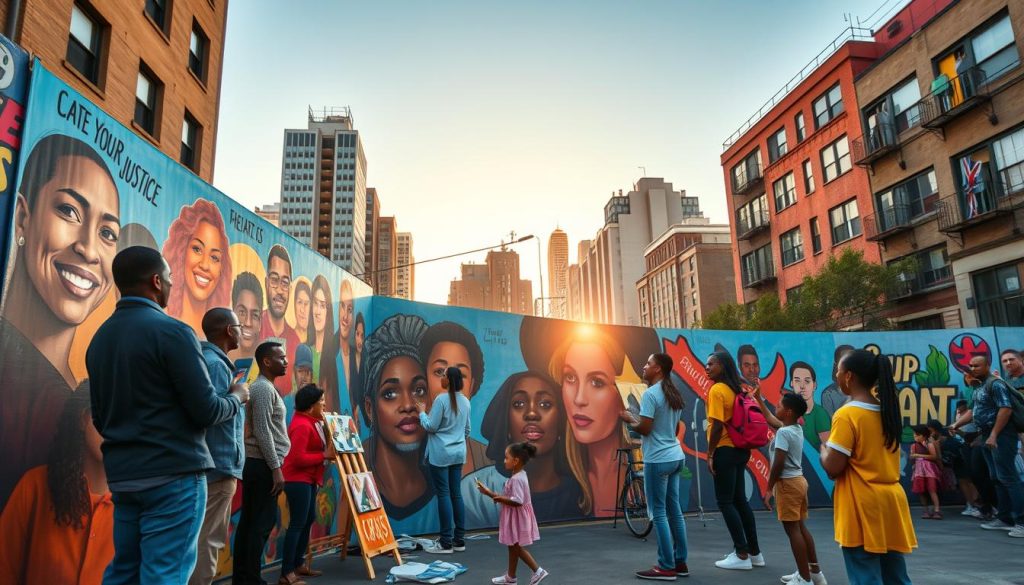
Art history shows how images and objects anchor political moments and social debate. By studying the past, we learn to read visual cues in today’s art. This helps artists, curators, and activists create meaningful pieces that go beyond market buzz.
Art as a Catalyst for Activism
Visual forms act as catalysts for activism by making complex ideas immediate and emotional. Diego Rivera’s murals turned labor struggles into public narratives. Kara Walker’s silhouettes force audiences to confront racial histories in intimate settings.
Sculpture in plazas and public art installations create shared spaces for protest and discussion. Photography has a particular power to document injustice and shape public opinion. Francisco Goya’s prints exposed war’s brutality centuries before mass media.
Contemporary art photographers continue that legacy by circulating images that spur debate.
Historical Examples of Art Impacting Society
Case studies reveal patterns in how art influences society. Goya’s Disasters of War altered perceptions of conflict. Faith Ringgold’s narrative quilts retell African American history for new generations.
Diego Rivera’s murals informed policy conversations about labor and urban life after they entered civic spaces. The Crystal Palace and international exhibitions in the 19th century modeled cross-national problem solving. Hokusai’s waves now read as metaphors for environmental change in contemporary art dialogues.
Maria Brito warns that market hype can cloud meaning. Works rooted in art history and sustained dialogue outlast trends and continue to influence civic narratives. Ziegler’s examples remind readers that art can confront fear, expand empathy, and reshape what a public imagines as possible.
- How art works: it visualizes injustice, invites identification, and proposes alternatives.
- Channels for change: public art, sculpture, photography, murals, and activist exhibitions.
- Lasting impact: historically grounded pieces enter education, policy conversation, and cultural memory.
Understanding Styles and Techniques
Art historians study how styles evolve due to culture, materials, and new techniques. They look at ukiyo-e prints and Hokusai’s woodblocks, and also at Rembrandt’s drawings and ancient handprints. Each example shows how choices in materials and tools shape art.
Different Artistic Styles Explained
Naturalism focuses on accurate depictions with careful brushwork and light studies. Baroque uses dramatic contrasts and dynamic compositions, adding depth with layered painting. Romanticism emphasizes emotion and atmosphere through expressive paint and color.
Impressionism captures light with quick brushstrokes and plein-air pigment mixing. Expressionism exaggerates form and color to show inner feelings. Abstract Expressionism uses gestures and scale, often with nontraditional materials, to show raw presence.
Minimalism uses simple forms and industrial methods, focusing on essentials. Conceptualism values ideas over craft, using text, installation, or found objects instead of traditional methods.
Techniques and Their Historical Context
Historical techniques often solved practical problems. The Book of Kells used detailed illumination to preserve pigment. Andrea Pozzo used perspective to create stunning ceiling illusions. Joseph Paxton used glass and iron to expand architecture and light.
Painting techniques evolved with new pigments, varnishes, and supports. Print processes like woodcut and etching influenced ukiyo-e and European graphics. Sculpture techniques changed from marble to steel and bronze as materials improved.
Photography techniques reflect chemistry and optics. Early photochemical processes set limits on exposure and composition. Today, photography combines digital sensors with traditional framing to explore new ideas. Knowing these techniques helps us understand works by Agnes Martin, Giorgio Morandi, or Joan Mitchell.
- Materials: pigments, paper, canvas, metal, glass
- Processes: printmaking, glazing, casting, photochemical development
- Approaches: plein air, studio layering, industrial fabrication, digital rendering
Linking styles to techniques offers a practical guide for study and practice. Students and artists gain clarity by connecting form to material, intent to process, and influence to technique.
Art Collecting: A Blend of History and Passion
Art collecting is where taste, knowledge, and the art market meet. Those who collect with curiosity and knowledge help artists and museums thrive. Visiting museums and talking to curators sharpens your eye for art.
The Importance of Art Collection
A good collection is like cultural guardianship. Those who become curators or conservators often start by collecting. They look for context in their purchases.
Buying art wisely means understanding its history. Maria Brito says it’s key to know an artwork’s background and its place in an artist’s career. This way, you avoid buying based on fleeting trends.
How Collecting Shapes Art History
How art is displayed shapes our memory of it. Historic shows like the Crystal Palace set trends. Today, collectors and museums decide what art we remember.
Collectors who value history guide the market. By choosing art with a strong background, they encourage lasting interest. This shapes reputations, museum choices, and research.
Practical steps can help collectors. Seek advice, visit galleries, study auction records, and read art catalogues. These steps build confidence in buying art.
Simple steps are important too. Keep records of an artwork’s history, discuss its condition, and think about its future in exhibitions. Collecting with care preserves art for everyone to see.
The Future of Art: Trends to Watch
The world of contemporary art is changing fast. Museums, galleries, and online spaces are looking at old works in new ways. They’re also starting new trends. People say we’ll see more revivalist painting, immersive media, and global art exchange.
Emerging Art Forms to Follow
Artists are trying out new things like immersive installations and augmented reality. They’re also making art that combines code and craft. At the same time, there’s a comeback for painting and photography.
Collectors and curators are excited about art that mixes different styles. For example, some paintings use projection or sound. Maria Brito says young painters are inspired by Joan Mitchell but are trying new things.
- Immersive media: site-specific installations and VR that demand physical and virtual presence.
- Algorithmic art: generative images and systems that reframe authorship.
- Digital art: blockchain provenance, NFTs, and web-native practices expanding markets.
- Renewed photography: experimental processes and cross-disciplinary projects.
The Influence of Globalization on Art
Globalization is making art more diverse. Works from Africa, Latin America, and Southeast Asia are getting more attention. Curators are looking at old masters like Hokusai in new ways, thanks to climate change and global connections.
Exhibition architects and critics say global exchange is creating new kinds of art. This art combines local traditions with international styles. Andreas Ziegler’s ideas about showing art from different cultures are becoming more common.
- Global dialogues give non-Western perspectives a larger platform in contemporary art.
- Digital platforms accelerate visibility for artists outside traditional centers.
- Historical literacy remains key to understanding the depth of trends.
These changes point to a future where art is shaped by technology, history, and global talks. We’ll see how art adapts to new tools while keeping old traditions alive.
Art and Commercialization
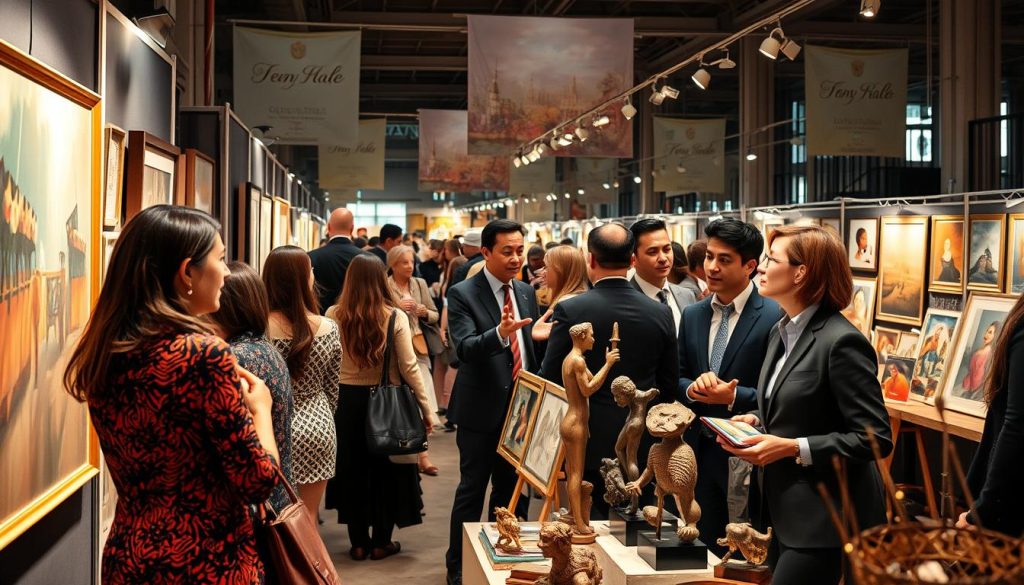
Commercial forces shape how we find and value art. Museums and university programs keep cultural meaning alive. At the same time, market dynamics push pieces into new visibility. This tension affects artists, curators, collectors, and students of fine art and photography.
The economics of collecting rely on galleries, dealers, auction houses, fairs, and online platforms. Auctions and major fairs speed up transactions and attract new buyers. Maria Brito says social media and digital catalogs have changed how we buy art, making sales faster and more marketing-driven.
Art galleries play a key role in setting value through promotion, framing, and exhibition design. A good gallery program can place contemporary art in a historical context. This helps works advance beyond just commercial appeal. Galleries also build relationships with advisors and museums, supporting long-term careers.
The Crystal Palace example shows how exhibition design and commercial presentation draw public attention. When price becomes a measure of taste, depth can be lost. Ziegler’s analysis points out that commercialization increases exposure but may simplify complex histories in fine art and photography.
Market players shape what gets made. Top collectors and dealers reward art that fits into established narratives. They also encourage innovation that expands those narratives. This influences demand and studio practice for artists aiming for sustainable careers.
Practical strategies help navigate the art market responsibly:
- Conduct historical research to situate work within art history and to support valuation claims.
- Develop advisor relationships for contextualized guidance on fairs, auctions, and gallery representation.
- Use digital tools to reach wider audiences while keeping the museum and academic conversations in view.
Understanding commercialization helps stakeholders balance commercial success with cultural contribution. A balanced approach preserves the meaning of art beyond short market cycles. It also engages a broader audience that auctions and online platforms bring to contemporary art.
Preservation of Art and Cultural Heritage
Artworks stay relevant for generations with careful care. Museums and conservators collect the stories of objects, from the Book of Kells to cave handprints. They help us understand these pieces.
Preservation uses science and ethics to keep art like paintings, sculpture, and photography available. This way, we can study and enjoy them.
The importance of art conservation
Conservation keeps originals safe while also valuing copies, like Hokusai’s The Great Wave. At places like the Metropolitan Museum of Art and the Smithsonian, experts clean and protect objects. They use methods like cleaning and controlling the environment to make art last longer.
This work helps with teaching, evaluating art, and training the eye, as Maria Brito said. It’s like a gym for museums.
-
Painting restoration uses special varnishes, careful touch-ups, and controlling humidity to protect colors.
-
Sculpture care involves checking its structure, treating corrosion, and using the right materials for repairs on different materials.
-
Paper and archival preservation need special storage, making them less acidic, and keeping them in low light to protect fragile items.
-
Photography needs special care for different types of images to stop fading and damage from chemicals.
Institutional roles and responsibilities
Museums, galleries, and labs work together to preserve and share art. They decide how long to display items, under what conditions to lend them, and how to prevent damage. Teams balance restoring items with being open about their work.
Contemporary challenges
-
Climate change poses risks from changing humidity and extreme weather, affecting storage and transport.
-
Digitization makes art more accessible but creates long-term challenges for keeping digital copies up to date.
-
Debates on repatriation and restitution make institutions face the challenge of balancing care with rightful ownership.
-
Not enough funding and skilled workers limit proactive conservation, leaving some art at risk.
Dealing with these issues requires teamwork and public support. We need better climate control, more conservators, and clear policies. These steps help ensure that sculpture, painting, and photography are enjoyed by future generations.
Art Criticism and Its Evolution
Art criticism has changed a lot. It’s now about connecting art with society, not just listing what’s good. Critics and historians help us see paintings, sculpture, photography, and installations in new ways. Jon Berger’s Ways of Seeing changed how we see images, showing how power and vision are linked.
Historical Context of Art Criticism
At first, critics focused on who made the art and how it was made. They worked in galleries and museums. But over time, they started looking at the art’s place in society and culture too. This change allowed for new views, like feminist and postcolonial perspectives.
Art history taught us to see art in a timeline. Critics like Michael Fried and Clement Greenberg pushed for art to be about form. Their ideas helped shape what collectors and the art market valued for years.
Modern Critiques and Their Relevance
Today, art criticism deals with fast-paced social media and global markets. Maria Brito says marketing often focuses on the flashy. Good criticism looks beyond the surface, linking new art to a wider art history.
Contemporary art thrives when critics connect it to its context. They help museums and galleries decide what art will last. Ziegler points out that education is key: it helps us understand different cultures and reduces fear of the unknown.
- Educational role: Critics guide viewers through unfamiliar media.
- Contextualization: Critics place works in tradition and debate.
- Market balance: Thoughtful reviews temper promotional noise in fine art sales.
Today, criticism mixes deep history with fresh perspectives. It’s essential for grasping how art reflects power, identity, and change over time and across places.
The Interdisciplinary Nature of Art
Art history reveals that creativity goes beyond studios. Katsushika Hokusai’s works connect religious life with print culture. Rembrandt’s portraits show social history and personal grief.
The Crystal Palace shows how exhibitions shape industry and taste.
Art’s Connection to Other Fields
Art history is like science in solving problems. Architects and designers use visual arts to design public spaces. Joseph Paxton’s greenhouse designs combined horticulture, engineering, and beauty.
Maria Brito says museum training helps in talking with technologists and business leaders. This training also gives artists tools for education, policy, and media.
Collaborative Art Projects Across Disciplines
Successful projects team artists with scientists, engineers, or programmers. They use photography, installation, and digital tools to share research. Andrea Pozzo’s illusionistic ceilings show the use of VR and projection today.
- Art and science collaborations make data memorable.
- Art and technology partnerships create interactive public works.
- Cross-sector collaboration supports community programs and activism.
Today’s art thrives on these collaborations. Artists, educators, and technologists value the creative risk of mixing methods. This work expands visual arts and redefines photography and installation in public life.
Building a Personal Artistic Voice
Artists grow their unique voice by learning from the past. They see how history shapes today’s art. This approach, rooted in art history, makes their work stand out.
Art historians teach us to respect our predecessors. They show us patterns of human experience. Artists like Faith Ringgold blend personal stories with cultural context, creating a voice that’s both historical and unique.
Developing Individual Style Through History
Maria Brito offers a clear path for artists to find their style. She suggests identifying influences, defining what makes your work different, and seeing it as part of a larger story. This helps artists in various mediums to understand their borrowings and innovations.
By keeping visual journals and visiting museums, artists can track their growth. This method clarifies their unique contributions to art.
Learning from the Past to Innovate in Art
Artists can learn from greats like Monet and Michelangelo. These artists offer creative solutions that inspire today’s artists. Ziegler believes studying them boosts imagination and leads to new ideas.
Artists should analyze both the form and context of historical works. This way, history becomes a source of inspiration, not just a copycat guide.
Steps to follow include regular museum visits and keeping a visual journal. Writing notes on influences and original choices helps artists develop their style. This practice builds a voice that honors the past while innovating in art.