Many painters and artists in the U.S. create their art at home. This guide helps you make a useful art studio on a budget. It shows how to set up a space for fine, modern, and contemporary art without needing a big studio.
There’s no one right way to build an art studio. Some artists like clean spaces, while others find inspiration in mess. The Hugh Lane Gallery in Dublin showed Francis Bacon’s studio to highlight this. It shows that a good studio matches the artist’s style.
The main idea is to know what you need and improve little by little. You must have a good easel, the right lighting, and safe places to store your stuff. This guide uses art teaching and shopping tips for easels, lights, storage, and comfort.
This guide will talk about choosing the right lights, easels, storage, air, and safety. It will also mention art galleries, museums, abstract art, and history to help you decide.
Key Takeaways
- Most artists can build a practical home art studio without large expense.
- Study your workflow to choose the right studio setup and easel.
- Prioritize controlled lighting, secure storage, and safe ventilation.
- Look to art-teaching practices and retail guidance for reliable tools.
- Start small and upgrade tools and space as skills and budget grow.
Understanding Your Creative Needs
Before setting up a workspace, artists should think about their daily habits and goals. Knowing what they need helps pick the right tools and materials. This makes the studio a place they enjoy coming back to.
Identifying Your Artistic Medium
Start by listing your main mediums: oil, acrylic, watercolor, mixed media, and digital. Each one has its own needs for storage and safety. For example, oil painting needs solvents and careful disposal.
Watercolors and gouache are easy to use in small spaces because they don’t smell much. Mixed media and collage need space for papers and adhesives. Digital art focuses on hardware and color-calibrated displays.
Analyzing Your Workflow
Understanding your typical session helps plan your space. You’ll need areas for reference, setup, painting, drying, and cleanup. This shows where to put tools and supplies.
Good lighting is key. Use different lights for the subject and canvas to avoid color changes. A controlled light environment helps keep colors consistent. For small spaces, a portable kit keeps your workflow going.
Setting Goals for Your Studio
Set achievable goals for your studio. Start with a small area for six months and a basic supply list. Later, add more equipment like a standing easel or proper ventilation.
Make lists for materials and storage to avoid buying too much. Focus on what’s essential to save money and space. A good studio grows with you, supports your art, and encourages regular practice.
Selecting the Right Space
Where you work affects your creativity. It’s important to find a spot that meets your needs. Whether it’s a home art studio or a dedicated space, the right location balances light, safety, and convenience.
Factors to Consider for Location
Start by measuring the room size and imagining yourself working there. Natural light is key for color work. Make sure there’s easy access to water for cleaning and good air flow for solvents.
Having a door to close is vital for drying art and keeping fumes out. If you work with messy media, separate rooms are best. Shared spaces can work with locked storage for solvents and areas for drying.
Install smoke detectors and keep a fire extinguisher ready when using chemicals.
Adapting Your Home for an Art Studio
Small changes can make a big difference in your home. Use blinds or curtains to control the light. Add overhead lights or tripod lamps for consistent lighting.
Choose bulbs with a high CRI (Color Rendering Index) of 90+ and a color temperature of about 5000K for accurate color. Use fluorescent tube housings or dimmable LED bulbs to adjust light levels. Turn closets, garages, basements, or spare bedrooms into a studio.
Creative Use of Small Spaces
A small studio can be very functional with smart planning. Work from a broom closet or a corner using table-top or box easels. A “studio in a bag” keeps your tools organized and portable.
Focus on smaller formats like studies or watercolors when space is tight. Use an iPad for photo references. Fold-away workstations and mobile art trolleys help you store materials and free up space when needed.
Budgeting for Your Art Studio
Creating a budget for your art studio is key to managing costs from the start. A simple estimate helps you make smart purchases and avoid unnecessary spending. The goal is to create a space that boosts creativity without breaking the bank.
Estimating Initial Costs
First, list the essentials and their price ranges. Lighting is vital: LED bulbs cost $10–$40, and fluorescent tube housings are around $30–$80 plus shipping. Easels vary; desk easels are $20–$100, while standing easels from Weber Avanti and Soho H Frame are pricier.
Repurpose work surfaces to save money. A used desk or an IKEA top can start at $60. Basic paints, brushes, and palettes are the next step. Affordable storage like the IKEA NISSAFORS cart helps keep things organized. Don’t forget ventilation or an air purifier; models like the Winix 5500-2 are recommended for small spaces.
Prioritizing Essential Supplies
Focus on items that impact your daily work. Choose an easel that fits your space before buying bigger items. Good lighting with CRI 90+ and 5000K color temperature is essential for color accuracy.
Start with a basic palette, reliable brushes, and quality paints. Include safe storage for solvents and a metal trash can for oily rags. Begin with the basics and add specialized tools as your budget allows.
Finding Affordable Alternatives
Use household items to cut costs. Old jars can hold brushes, and dish racks can hold panels. Laptop tables and repurposed computer desks make great adjustable work surfaces.
- Buy cheap utility carts or IKEA NISSAFORS for mobile storage.
- Look for secondhand gear, student-grade paints, and clearance brushes.
- Build DIY wall easels from online plans to save on large purchases.
These strategies make it possible to enjoy fine art on a budget. Making smart choices helps stretch your budget while maintaining quality for your long-term projects.
Essential Tools for Artists
A good studio mixes old and new art tools. The right tools save time, protect your work, and help you grow. Here are some key items and care tips to build a lasting setup.
Must-Have Supplies for Beginners
- Basic brushes: round and flat sets. Store brushes upright in jars to protect bristles.
- Palette: wood or plastic mixing surface for controlled color blends.
- Starter paints: choose a reliable starter set for oil, acrylic, or watercolor.
- Sketchbook: medium-weight paper for studies and thumbnails.
- Table-top or portable easel: options like Soho Aluminium Table Easel and Blick Studio Sketchbox suit small spaces.
- Palette knives and rags: for texture and cleanup.
- Glassine or parchment paper: safe storage for wet works and drawings.
These supplies make a compact, flexible kit. Beginners can try different media without spending too much.
Advanced Tools for Experienced Artists
- H-frame standing easels: choose sturdy models such as Weber Avanti 2 Steel or Soho H Frame for large canvases.
- Taborets: artist workstations like Todd Reifers Signature and Matisse French Painter’s Taboret combine seating with storage.
- Professional lighting rigs: consistent color temperature improves color matching and photography.
- Wall easels and custom rigs: useful for multi-panel projects and large-scale work.
- Air purifiers: reduce VOCs when using solvents and heavier modern art materials.
- Studio-grade paints: brands such as Old Holland deliver higher pigment load and longevity.
- Large built-in racks: organized drying and storage speeds workflow and protects paintings.
Experienced artists use fine art tools and modern materials to create bigger and more detailed work. Investing in quality gear saves money in the long run.
Maintaining Your Art Supplies
- Brush care: clean with Ivory soap or purpose-made brush cleaner after use. Avoid storing brushes flat to prevent bristle splaying.
- Paint tube storage: store tubes flat or cap-side up depending on medium. Check for oil separation and gently squeeze tubes before use.
- Oily rags: place used rags in a metal trash can with a tight lid to prevent spontaneous combustion.
- Solvents and mediums: keep solvents in sealed, solvent-resistant containers and away from living areas.
- Linseed oil and mediums: seal containers tightly and label them for safe long-term use.
Regular maintenance keeps tools working well and your studio safe. Small habits protect your materials and keep your creativity flowing.
Creating a Functional Layout
The studio layout should have clear zones for reference, painting, drying, and storage. A well-planned layout helps artists stay focused and avoid interruptions. It keeps the art workflow smooth.
Understanding Workflow and Space
Put the reference area near natural or controlled light. Keep the painting easel a few feet away. For painting objects, use separate light sources for the subject and the canvas.
A viewing distance of 3–4 feet is best for checking proportions and making composition decisions.
Organizing Your Workspace
Keep most-used materials on carts or taborets for easy access. Use shelves for bulk storage and heavier jars to hold brushes upright. This prevents damage and keeps them from tipping over.
- Store panels and masonite in vertical racks or dish racks to save space.
- Avoid stacking wet canvases face-to-face or laying them flat to prevent sagging.
- Keep solvents and flammables in sealed containers and use a metal trash can for oily rags.
The Importance of Lighting
Controlled studio lighting is key for making color decisions. Look for fixtures with CRI 90+ and a color temperature near 5000K for accurate tones.
- Use two light sources: one for the subject and one placed behind and above the painter for even canvas illumination.
- Choose dimmable LED bulbs such as GE Refresh 60-Watt EQ A19 Daylight or fluorescent tube housings for broad coverage.
- Adjust brightness to reduce glare and consider wall color to manage bounced light.
Good workspace organization, careful lighting, and ergonomics make the art workflow smoother. This creates a safer, more productive space where creativity can flourish.
Designing Your Art Studio Aesthetics
Creating a workspace for art starts with choosing light, surface, and mood. Good studio aesthetics help artists focus on color and form. Practical choices in paint finishes, furniture, and display make the studio both productive and welcoming.
Choosing a Color Palette
Neutral wall colors prevent color cast on paintings. Many artists pick a neutral grey or navy in satin finish. These choices help see colors more accurately and reduce glare from direct light.
Dark walls add drama and depth. Light walls brighten small rooms and reflect light. But, they need adjusted lighting to avoid flat shadows. Both strategies work well with task lighting and reflectors.
Personalizing Your Space
Display favorite works and inspirational images within reach. Rotating these pieces keeps ideas fresh. Adding motivational quotes, sketches, or small framed studies helps maintain momentum.
Comfort items are important. A gel mat for standing comfort and supportive seating make long sessions sustainable. Simple touches like a rug, plants, or a pencil cup personalize the studio without cluttering the workflow.
Inspiration from Professional Studios
Professional setups vary widely. Francis Bacon’s chaotic studio shows how a messy space can spark creativity. Other studios use H-frame easels, taborets, overhead fluorescent housings, and built-in storage racks for order and access.
Look at museum artist studios and gallery spaces for ideas. Art gallery inspiration and contemporary art studio images show storage layouts and lighting solutions. Adapt these ideas to fit your space, tools, and process.
- Tip: Keep a small sketchbook or cork board for rotating prompts.
- Tip: Store frequently used materials at eye level for quick access.
- Tip: Use a consistent studio color palette for cohesive display and photography.
Building Storage Solutions
Keeping a studio tidy is key to staying productive. Good art storage solutions protect your work, save time, and make cleaning easier. Here are some tips on choosing supplies, using walls smartly, and finding new uses for items.
Key storage options for supplies
- Opt for a tabouret with drawers for brushes, knives, and small tubes. It saves you from walking across the room.
- An IKEA NISSAFORS utility cart is a budget-friendly mobile station. It moves easily between your easel and sink.
- Store brushes upright in jars or tins to keep bristles in shape. Label them by medium to avoid mixing.
- Paint tubes should be stored flat in racks or drawers. This keeps them usable longer and keeps your space tidy.
- Put solvents and chemicals in sealed containers on a well-ventilated shelf. Always follow safety guidelines and keep lids tight.
- Use glassine or parchment paper between panels and linen to prevent sticking and damage during storage.
Utilizing vertical space
- Wall shelves and easels free up floor space and display your work. Wall easels save space but might limit access.
- Turn a closet into vertical storage racks or built-in painting racks. This keeps canvases upright and easy to access.
- Install wall-mounted ledges to hold canvases by the edges. This preserves the painted side and makes switching projects easier.
- Position vertical storage near natural light. This keeps canvases visible and easy to check without crawling through stacks.
Creative storage ideas
- Use a dish rack to hold small canvases or panels upright. It keeps them separated and prevents damage.
- Convert a broom closet or wardrobe into a compact studio hub. Add shelves, hooks, and a small work surface for focused tasks.
- Turn a laptop table with castors into a mobile mini-station. It follows you around the studio.
- Adapt art trolleys or caddies into pop-up workstations. They store mediums, varnishes, and tools in one unit.
- Store stretched canvases leaning on their frames. Never stack wet paintings face-to-face.
These ideas combine practical storage with modern art storage. They work for both hobbyists and professionals who need flexible, safe, and efficient solutions.
Incorporating Technology into Your Studio
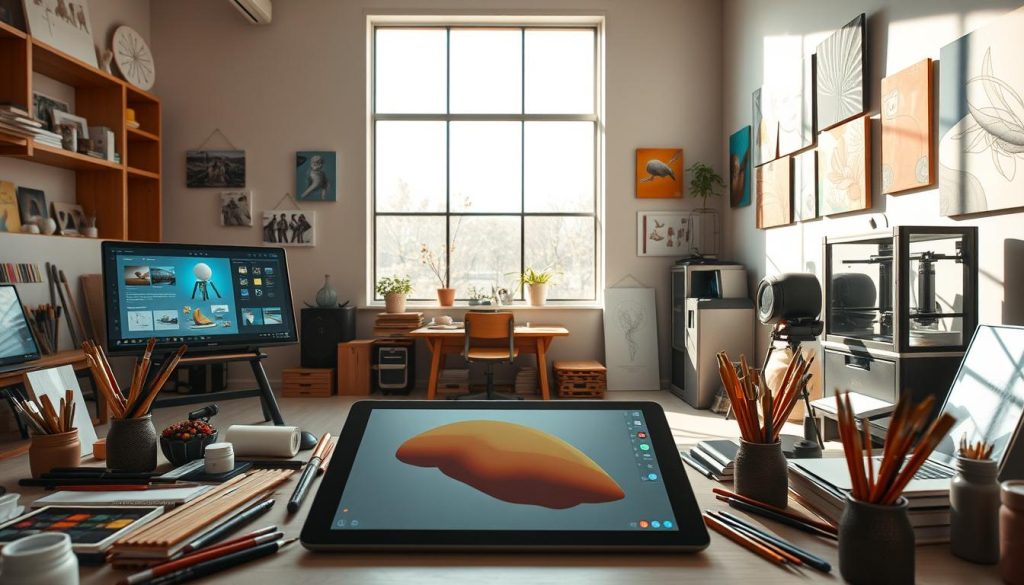
Technology changes how artists plan, create, and share their work. Good tools can make work faster, offer more creative options, and fit in small spaces. This guide will show you useful software, hybrid methods, and gadgets to make your studio life easier.
Useful software for artists
Apps for image references and photo tools help with color matching and planning. Programs like Procreate, Adobe Photoshop, and Affinity Photo are great for digital art. Apps like Adobe Portfolio or ArtStation make it easy to organize and show your work.
- Use an iPad or tablet for high-resolution photo references.
- Try color-sampling features to match paint mixes before applying them to canvas.
- Keep reference libraries in cloud storage to access images from any workspace.
Digital versus traditional techniques
Hybrid workflows mix digital and analog methods. Artists can make digital color studies before painting. Sketches on a tablet can be used as templates for bigger works.
Working from photos is practical in small studios. A tripod with an iPad provides a stable, life-size reference without needing a live model. This method focuses on composition and light, saving space.
Enhancing productivity with gadgets
Small investments can make a big difference. Adjustable standing desks or laptop tables with castors let artists change positions. Gel mats reduce fatigue during long standing sessions. Dimmable LED bulbs offer consistent color and adjustable light.
- Use a tripod stand for digital references to keep screens at painting height.
- Consider an air purifier like the Winix 5500-2 when ventilation is limited.
- Install a plug-in overhead light housing for affordable, controllable illumination.
Using art technology, from software to gadgets, makes studios cleaner and faster. Visual arts technology and digital art tools let artists achieve more in any space.
Establishing a Comfortable Environment
A fine art workspace is both beautiful and practical. It supports long hours of creativity. Small changes can make a big difference in comfort and safety.
Ergonomics for Artists
Good studio ergonomics start with adjustable work surfaces. This lets artists switch between sitting and standing. An easel with a ledge for the elbow makes big canvases easier to handle.
Using taborets and stools at the right height helps avoid neck and back pain. Anti-fatigue gel mats help reduce fatigue from standing for long periods. It’s important to change posture often and take short breaks to prevent injuries.
Tools should be placed where they’re easy to reach. This makes work more efficient and comfortable.
Creating an Inviting Atmosphere
A welcoming space encourages regular practice. Add a consistent color scheme, display favorite pieces, and keep surfaces clean. This reduces visual clutter and makes the space more inviting.
Having comfortable seating is key for critique and reflection. Keep cleaning supplies nearby for quick clean-ups. A simple routine signals the start and end of each session.
Small touches, like a favorite lamp or curated objects, can greatly improve mood. They make the studio a comfortable place to return to every day.
Ensuring Proper Ventilation
Ventilation is critical when working with oils, solvents, or epoxy. If possible, place painting and solvent work near an open window. Or, use an exhaust fan to remove fumes from the room.
Always use fresh air first. Air purifiers can help reduce VOCs, but they shouldn’t replace ventilation. If storage allows, keep solvents and strong chemicals in a separate room or sealed cabinet.
Follow product labels and local safety guidelines. This helps maintain good air quality in the studio, meeting art museum standards.
Time Management for Art Projects
Effective workflows help artists stay on track and meet deadlines. By setting clear goals and following a routine, artists can boost their productivity. This approach treats time as a resource, not a barrier.
Setting Project Deadlines
Divide a project into manageable steps: studies, underpainting, layers, and final touches. Give each step a realistic timeline.
- Consider how long materials take to dry. Oil paints need a week, while thick layers take longer.
- Plan ahead for external deadlines like gallery submissions or portfolio updates.
- Use short milestones to check progress and adjust deadlines as needed.
Creating a Routine
A consistent schedule sharpens focus. Regular sessions build a habit that enhances productivity.
- Display recent work in your studio to encourage returning to it.
- Carry a portable kit for quick sessions when time is short.
- Take photos of your work and use them as phone wallpapers to keep momentum.
Balancing Art with Other Responsibilities
Artists often manage multiple roles. Treat studio time as non-negotiable and schedule it.
- Use short studies or quick media when time is tight. Watercolors and gouache are faster than oils.
- Work on smaller canvases for quicker completion while keeping larger projects moving.
- Plan short sessions for sketching or color studies to keep creativity alive during busy times.
Networking as an Artist
Getting from private to public recognition takes real connections. Artists who dive into local scenes find more chances for shows, commissions, and resources. Building relationships across venues and peers helps a studio grow beyond one room.
Engaging with peers
Join local groups and artist-run collectives to meet others and curators. Visiting museums like the Museum of Modern Art or regional galleries gives context from art history and trends. Open studio events, gallery openings, and talks are great for sharing ideas and making lasting connections.
Working together
- Organize shared studio days for bigger easels, kilns, or venting without high costs.
- Think about co-op galleries and group shows to get more exposure and strengthen gallery ties.
- Set up skill-swap deals to share techniques and work on projects together.
Promoting work online
Post process and finished work with good images on Instagram. Stories and short videos tell a story that draws in collectors, critics, and curators. Use social media to share pop-up shows, workshops, and studio visits to grow your network.
Being active in the art world, networking well, and respecting art history all help a creative career. Small, regular steps lead to steady growth and more chances.
Marketing Your Art Studio
A good marketing plan is key for an artist to reach the public. It combines practical steps with consistent presentation. This builds reputation and sales, helping to market art online and offline.
Building an Online Presence
Start with a professional website. It should have a portfolio, artist statement, and contact info. Mentioning art history and contemporary art in your statement adds context.
Use social profiles like Instagram, Artsy, and Behance to link back to your site. Make sure each listing has clear images, dimensions, media, and pricing. This supports your marketing goals.
Showcasing Your Work
Quality photos are more important than quantity. Use consistent, well-lit photography or high-resolution scans. Prepare files for galleries and online platforms to ensure images display well.
Curate series or bodies of work to tell cohesive stories. This makes it easier to pitch to galleries and use promotion tactics. Pop-up shows, studio viewings, and limited-edition prints create physical touchpoints and gather feedback.
Strategies for Local Engagement
Contact nearby galleries and museums for group shows, jury calls, and open studio tours. Participating in art fairs and community events raises visibility and builds collector relationships.
Work with local businesses to display pieces in cafes, boutiques, and co-working spaces. Hosting open studio days invites critics, curators, and collectors. This strengthens art gallery promotion and shows art in meaningful settings.
- Tip: Keep messaging consistent across web copy and printed materials to reinforce the brand.
- Tip: Track inquiries and sales to refine outreach and improve abstract art marketing efforts.
Retreating for Creative Energy
A creative retreat can recharge an artist’s practice when routine drains ideas. Short trips, museum visits, and time in nature supply new visual material and fresh context for studio work.
To find inspiration, artists should vary their outings. Visit the Museum of Modern Art for contemporary art inspiration. Walk city streets to collect urban textures. Spend mornings plein air to record light and color.
Art history influence strengthens choices when artists study past movements and techniques. Reviewing works by Georgia O’Keeffe or Jasper Johns can reveal compositional ideas worth adapting.
Short art breaks during a session prevent fatigue and sharpen judgment. Ten-minute walks or a coffee break clears the mind. Stepping away often resolves composition or color dilemmas on return.
- Schedule brief, regular pauses to sustain focus.
- Use non-art hobbies to refresh visual thinking.
- Plan longer downtime as a mini creative retreat to reset routines.
When blocked, practical techniques help restart momentum. Work on small studies to test ideas quickly. Switch media, for example watercolor instead of oils, to unlock different responses.
- Make thumbnail sketches from photographs to explore layout.
- Attend a workshop or join a critique group for outside perspective.
- Collaborate with a peer to exchange prompts and methods.
Combining study trips, intentional art breaks, and targeted exercises forms a reliable strategy for renewals. These steps help artists tap contemporary art inspiration while honoring art history influence in their ongoing work.
Adapting to Changing Trends
Artists who stay adaptable find new ways to grow. They watch for changes in art trends and the visual arts world. This helps them fit into current conversations.
Reading reviews, visiting museums, and tracking art trends online keeps them grounded. It makes their work relevant.
Staying Current in the Art World
They follow gallery shows and museum lists from places like the Museum of Modern Art or the Tate. Reading artist interviews in Artforum or Frieze gives them context. It shows where abstract art trends fit in bigger movements.
Social platforms and curator talks reveal small trends. These trends affect local markets and what collectors want.
Experimenting with New Techniques
Trying out new techniques reduces risk and sparks discovery. Artists can test digital tools, mixed media, or new supports like masonite and linen. Short workshops and online classes let them learn before buying expensive materials.
Flexibility in Artistic Practice
Having a modular studio layout supports changing methods. Portable lighting, box easels, and removable surfaces allow quick changes. This physical flexibility mirrors mental agility in responding to shifting art trends and the ongoing visual arts evolution.
Preparing for Art Shows
Getting ready for art shows means having a solid plan. This plan should cover selecting, displaying, and engaging with your audience. It’s important to present your work professionally for galleries and museums. Here are some practical steps to help you prepare.
Selecting Works for Exhibitions
- Choose a group of works that share a theme, color palette, or technique. This makes it easier for curators to understand your message.
- Make sure your pieces are completely dry and stored properly. Use vertical racks and glassine between panels to prevent damage. Don’t stack wet works.
- Standardize framing and labeling for a consistent look. This reduces setup time and enhances the visitor experience at museums.
- Think about size limits and how to transport your work. Measure doorways and elevators to decide which pieces to show.
Tips for Display and Presentation
- Take high-quality photos of your work under neutral lighting. These images are great for promotion and documentation.
- Make clear wall labels and an artist statement. This should mention influences and technique. Short, direct labels help viewers connect quickly.
- Use reliable hanging hardware and plan sightlines for viewers. Step back three to four feet to see scale and detail.
- For small studios, develop packing solutions and transport plans. Use bubble wrap, custom crates, and a trusted mover to prevent damage.
Engaging with Art Critics and Collectors
- Prepare short talking points about your process, influences, and context. Connecting your work to art history or contemporary movements helps critics understand it.
- Host open studio events for direct contact. Face-to-face conversations build trust and support for collectors.
- Follow up professionally after shows. Send a thank-you note, share your online portfolio link, and offer condition reports when asked.
- Keep your online portfolio up to date. This makes it easy for critics and collectors to review your work after seeing it in person. Accessibility increases opportunities for galleries and museums.
Keeping Up with Artistic Development
Building artistic skills needs both learning and doing. It’s important to mix formal education with hands-on practice. This balance helps grow your skills and understand the art world better.
Continuing Education Opportunities
Structured programs like foundation courses and certificate programs help break skills into smaller lessons. Free masterclasses from museums and universities can add to your learning. Longer certificate programs offer deeper learning for those aiming to grow professionally.
Attending Workshops and Classes
Local and online art workshops introduce new techniques and tools. Museum and university programs offer chances to network and get feedback. These experiences speed up your learning.
Seeking Feedback on Your Work
Getting feedback from others helps spot areas for improvement. It’s good to get feedback from peers, teachers, and art professionals. Keeping records of your work and notes helps track your progress and improve over time.